
Hobby Workshop
Long-term Magento, Hyvä and ecommerce consultancy for a growing UK hobby retailer.
Modernising Magento for a specialist photographic book retailer
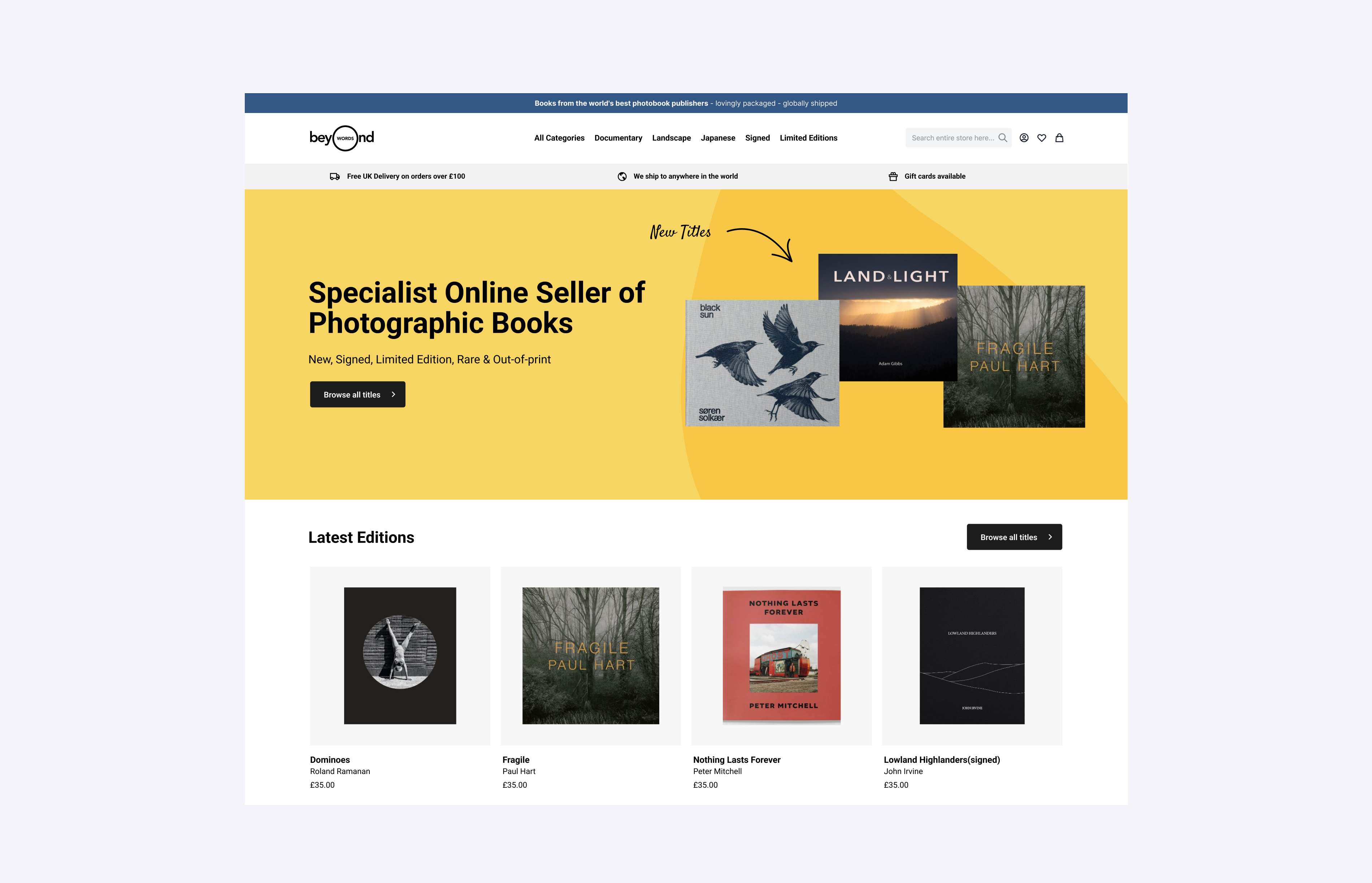
Beyond Words is an independent retailer specialising in remarkable photographic books. I audited and upgraded its Magento platform, redesigned and rebuilt the storefront and reworked the underlying architecture to improve performance, maintainability and search visibility.

Client overview
Founded in 2010, Beyond Words specialises in photographic books and serves an established customer base in the UK and internationally.
The ecommerce website plays an important role in presenting a highly visual and specialist catalogue, so the platform needed to be fast, reliable and able to reflect the quality of the publications being sold.
My work combined Magento development with platform auditing, frontend design and architectural improvements across the wider ecommerce stack.
Project overview & objectives
The store was continuing to generate sales, but both storefront performance and the Magento back office had begun to slow while the underlying platform also needed to be brought onto a newer supported version.
Rather than treating the Magento upgrade as an isolated maintenance exercise, the project became an opportunity to review the existing codebase, remove technical debt, modernise the frontend and make future platform updates easier to manage.
The challenge
Magento stores naturally evolve over time. Modules are installed, functionality changes and older implementation decisions can gradually increase the complexity of the platform.
In the case of Beyond Words, that complexity was beginning to affect both customer-facing site speed and the performance of the Magento administration area.
The platform also needed upgrading, which made it important to understand the existing code and extension estate before beginning development. Upgrading without that groundwork would have risked simply carrying unnecessary technical debt into the new version.


Platform & code audit
I began with a comprehensive audit of the Magento installation, reviewing the existing codebase, theme and module estate before defining the upgrade path.
Redundant code and modules were identified and removed rather than automatically migrated. This reduced unnecessary complexity and created a cleaner foundation for the upgraded platform.
This is an important part of my wider ecommerce consultancy approach: understanding why the platform has become complex before deciding what should be rebuilt, retained or replaced.
Magento upgrade & theme development
With the upgrade path established, I redesigned and rebuilt the Magento theme using a more modern frontend approach while retaining the functionality required by the existing store.
Third-party Magento modules were also moved towards Composer-based installation wherever possible. This made dependency management clearer and created a more maintainable process for future upgrades and security updates.
The work was therefore not simply a new visual layer on top of the existing application. The storefront, Magento version, extension architecture and deployment of third-party code were considered together as part of the same technical modernisation.
The outcome
The combination of the Magento upgrade, codebase clean-up and rebuilt frontend produced a significant improvement in site performance while giving the business a cleaner platform to maintain going forward.
Search visibility also improved following the work, reinforcing the value of treating technical performance, platform architecture and the customer-facing experience as connected parts of the same ecommerce project.
Just as importantly, future Magento maintenance became easier to approach because redundant code had been removed and third-party dependencies were managed through a more structured installation process.
Long-term Magento, Hyvä and ecommerce consultancy for a growing UK hobby retailer.

Magento multi-store development, Hyvä and ongoing ecommerce consultancy.

B2B Magento development, Swissup Breeze and long-term ecommerce support.